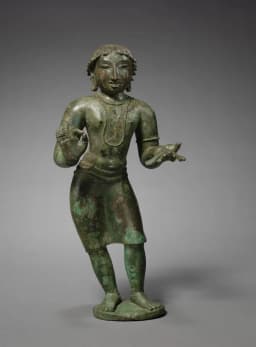
திருவாதவூரில் பிறந்தவர்; இளமையிலேயே கல்வியில் நிறைந்து, பாண்டிய மன்னனின் முதலமைச்சர் ஆனவர். அரசு, செல்வம், புகழ் — எல்லாம் கைவந்திருந்தது. ஒருநாள் மன்னன் அவரைக் குதிரைகள் வாங்கப் பொருளோடு அனுப்பினான். வழியில், திருப்பெருந்துறையில், குருந்த மரத்தடியில் — சீடர்கள் புடைசூழ, குருவின் கோலத்தில் — அமர்ந்திருந்தார் ஒருவர். ஒரு பார்வை. அத்தனையும் அத்துடன் முடிந்தது. அமைச்சர் அந்தத் திருவடிகளில் விழுந்தார்; எழுந்தபோது அவர் வேறு மனிதர். குதிரைப் பொருள் முழுவதும் கோயிலுக்கும் அடியார்களுக்கும் ஆயிற்று. அன்பு என்பது படிப்படியாக வளர்வதுண்டு; சிலருக்கோ அது மின்னல் — ஒரே நொடியில் பழைய வாழ்க்கை முழுவதையும் எரித்துவிடும். அவருக்கு அப்படித்தான்.
குதிரைகள் எங்கே என்று மன்னன் சினந்தான். இறைவர் நரிகளைக் குதிரைகளாக்கி அனுப்பினார்; இரவில் அவை மீண்டும் நரிகளாய் ஊளையிட்டன. சிறை, தண்டனை, வைகை மணலில் வெயிலில் நிறுத்தம் — அமைச்சராய் இருந்தவர் எல்லாவற்றையும் ஏற்றார். அப்போது வைகை பெருக்கெடுத்தது; கரை கட்ட ஒவ்வொரு வீட்டிலிருந்தும் ஆள் அனுப்ப வேண்டும் என்று ஆணை. யாருமற்ற, பிட்டு விற்கும் மூதாட்டி வந்திக்கு ஆள் இல்லை. அவளுக்காக, கூலிக்கு வேலை செய்யும் தொழிலாளியாய் இறைவரே வந்தார் — கூலி, ஒரு பிடி பிட்டு. வேலை செய்யாத அந்தத் தொழிலாளியை அரசனின் பிரம்பு அடித்தது — அடித்த அந்த அடி, உலகில் உள்ள எல்லா உயிர்களின் மேலும் விழுந்தது; மன்னன் உட்பட எல்லோரும் அதை உணர்ந்தனர். எல்லாம் புரிந்த மன்னன் அமைச்சரின் காலில் விழுந்தான். மாணிக்கவாசகரோ, அரசையும் உலகையும் விட்டு, பாடிக்கொண்டே நடந்தார்.
அவர் பாடியவை திருவாசகம் ஆயிற்று — தமிழில் உருகுதல் என்பதற்கே உருவம் கொடுத்த நூல். "அம்மையே அப்பா ஒப்பிலா மணியே" — தாயே, தந்தையே, ஒப்பில்லாத மணியே, அன்பில் விளைந்த ஆரமுதே — இப்படி ஒரு வரியில் தாயன்பும் காதலும் ஞானமும் ஒன்றாய்க் கலந்து ஓடும். தில்லையில், அவர் சொல்லச் சொல்ல இறைவரே அவை அனைத்தையும் ஏட்டில் எழுதினார் என்பது மரபு. இறுதியில், சிதம்பரம் கருவறையின் பேரொளியில் அவர் நடந்து சென்று மறைந்தார் — உடல் என்று எதுவும் மிச்சம் வைக்காமல், முழுவதும் உருகி. தமிழில் ஒரு சொலவடை உண்டு: "திருவாசகத்துக்கு உருகார் ஒரு வாசகத்துக்கும் உருகார்" — திருவாசகம் கேட்டு உருகாதவர், வேறு எதற்குமே உருக மாட்டார். இந்தத் தளத்தின் பெயரே அவர் வைத்துச் சென்ற சொல்தான்: உருகு.
In English
He was born at Thiruvathavur; brilliant from boyhood, he rose to become chief minister to the Pandya king. Power, wealth, renown — all of it was his. One day the king sent him with the treasury to buy horses. On the road, at Thiruperunthurai, under a kurundha tree, someone was seated in the form of a Guru, disciples around him. One look. Everything ended with it. The minister fell at those feet; when he rose, he was another man. The horse-money went, all of it, to the temple and the devotees. Love sometimes grows by degrees; for some it is lightning — one instant that burns down the old life entirely. For him it was lightning.
The king demanded his horses. The Lord sent jackals transformed into horses; at midnight they became jackals again and howled through the city. Prison, punishment, made to stand in the burning sand of the Vaigai river bed — the man who had been chief minister accepted all of it. Then the Vaigai flooded, and every household was ordered to send one labourer for the embankment. An old woman called Vanti, who sold pittu and had no one, could send no one. For her sake, the Lord Himself came as a hired labourer — His wage, a handful of pittu. When that labourer would not work, the king's cane struck Him — and the blow landed on every living being in the world at once; the king himself felt it. Understanding everything, the king fell at his minister's feet. But Manikkavasagar walked away from the kingdom and the world, singing.
What he sang became the Thiruvasagam — the book that gave melting itself a form in Tamil. "Ammaiye appa oppila maniye" — my Mother, my Father, jewel beyond compare, sweet nectar ripened out of love — in a single line, a mother's love, a lover's ache and a sage's knowing run as one stream. At Thillai, tradition says, the Lord Himself sat as scribe and wrote down every word as he spoke it. And at the end, he walked into the great light of the Chidambaram sanctum and was gone — leaving no body behind, melted entirely. There is a saying in Tamil: "Thiruvasagathukku urugar oru vasagathukkum urugar" — one who does not melt for the Thiruvasagam will melt for nothing at all. The very name of this platform is the word he left behind: urugu.
ஆழமான பொருள் · A deeper note
மாணிக்கவாசகர் அன்பின் வழி — உருகும் சீடனின் வழி. குருவின் ஒரு பார்வையில் பழைய வாழ்வே கரைந்து, இறைவனில் முழுவதும் உருகிக் கலத்தல். வேறு எதுவுமே வேண்டாத, உருகுதலே வழிபாடாகும் அன்பு.
Manikkavasagar's way is the melting disciple's way — the old life dissolving at a Guru's single glance, the whole self melting into the Lord. A love that wants nothing else, in which melting itself becomes the worship.
அவர் குரல் · Hear him speak
நமச்சிவாய வாஅழ்க நாதன்தாள் வாழ்க...
திருமுறை 8.1.1 — திருவாசகம் · சிவபுராணம்
The opening of the Thiruvasagam — before his own words begin, the sacred Name is blessed.
அம்மையே அப்பா ஒப்பிலா மணியே அன்பினில் விளைந்தஆ ரமுதே...
திருமுறை 8.37.3 — திருவாசகம் · அம்மையே அப்பா
All four relationships in one line — arguably the most Anbe-Sivam verse in the twelve Thirumurai.
நெக்கு நெக்குள் உருகி உருகி நின்றும் இருந்துங் கிடந்தும் எழுந்தும்...
திருமுறை 8.27.8 — திருவாசகம் · புணர்ச்சிப்பத்து
Melting itself, given words — the verse that shows what urugu means.