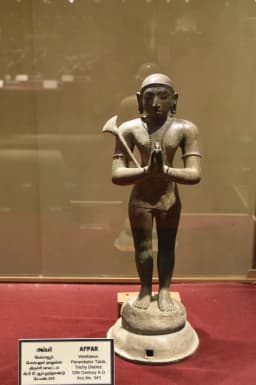
திருமுனைப்பாடி நாட்டில், திருவாமூரில் பிறந்தவர்; இளமைப் பெயர் மருள்நீக்கியார். வாழ்க்கையின் துயரங்கள் அவரை உலகைவிட்டு விலக்கின; உண்மையைத் தேடி அவர் சமண மடத்தில் சேர்ந்து, தருமசேனர் என்ற பெயரில் மடத்தின் தலைவரானார். ஆனால் அவருக்காக ஒரு விளக்கு அணையாமல் எரிந்துகொண்டிருந்தது — தமக்கை திலகவதியார். திருவதிகையில் சிவத்தொண்டில் நின்ற அவர்கள், தம்பி திரும்ப வேண்டும் என்று இறைவரிடம் நாள்தோறும் மன்றாடினார்கள். அந்த வேண்டுதலின் பதிலாய் வந்தது ஒரு நோய் — தீராத சூலை. எந்த மருந்துக்கும் அடங்காத அவ்வலி, அவரைத் தமக்கையின் வாசலுக்கே கொண்டு வந்தது. திலகவதியார் திருநீறு அணிவித்து, ஐந்தெழுத்தை ஓதச் சொன்னார்கள். திருவதிகை வீரட்டானத்து இறைவர் முன் நின்று அவர் பாடிய முதல் பதிகத்திலேயே நோய் நீங்கியது — "கூற்றாயின வாறு விலக்ககிலீர்".
நோய் நீங்கிய அந்தக் கணத்தில் வானிலிருந்து ஒரு குரல் வந்தது: இனி இவன் பெயர் நாவுக்கரசு — சொல்லின் அரசன். அரசு என்ற பட்டம் பெற்ற அவர், தம்மைப் பற்றிச் சொல்லிக்கொண்டதோ வேறு: அடியேன். நாயேன். இறைவனின் திருவடிகளில் வாழும் தொண்டன். அந்தச் சரணாகதியில் சிறுமை இல்லை — விடுதலை இருந்தது. துன்பங்கள் வந்தபோதும் — கல்லோடு கட்டி கடலில் இட்டபோதும் — அவர் பற்றியது ஐந்தெழுத்தை மட்டுமே: "சொற்றுணை வேதியன்" என்று நமச்சிவாயத்தைப் பாட, கல்லே தெப்பமாய் மிதந்து கரை சேர்த்தது.
அதன் பின் அவர் வாழ்க்கை முழுவதும் ஒரே தொண்டு: கையில் உழவாரப்படை ஏந்தி, ஊர் ஊராய் நடந்து, சிவன் கோயில்களில் முளைத்த களைகளைச் செதுக்கி, முற்றங்களைத் துப்புரவாக்கினார். சிறுவனாய் வந்த சம்பந்தர் அவரை "அப்பரே" என்று அழைத்தார் — தந்தையே என்று; அந்தப் பெயரே நிலைத்தது. முதுமையில், கயிலையைக் கண்ணாரக் காண வேண்டும் என்று வடக்கு நோக்கி நடந்தார்; கால்கள் தேய்ந்து, கைகளால் ஊர்ந்து, நெஞ்சால் நகர்ந்தும் நின்றுவிடவில்லை. அப்போது இறைவரின் அருளே வழி காட்டியது — அருகிலிருந்த குளத்தில் மூழ்கி எழுந்தபோது, அவர் நின்றது திருவையாற்றின் பொற்றாமரைக் குளக்கரையில்; அங்கே, உமையோடு விடையேறி வரும் இறைவரை — கயிலைக் காட்சியை அப்படியே — கண்டார். எண்பத்தொன்றாம் வயதில், திருப்புகலூரில், உழவாரத் தொண்டு செய்துகொண்டிருக்கும்போதே இறைவரின் திருவடிகளில் கலந்தார்.
In English
He was born at Thiruvamur in the Thirumunaipadi country; his childhood name was Marulneekiyar. Life's sorrows turned him from the world; searching for truth, he joined a Jain monastery and rose to head it under the name Dharmasena. But one lamp stayed burning for him — his elder sister Thilakavathiyar. Living a life of Shiva-service at Thiruvadhigai, she pleaded with the Lord daily for her brother's return. The answer to her prayer came as an illness — a colic no medicine could touch — and the pain carried him to his sister's own doorstep. She gave him the sacred ash and the five letters, Namasivaya. Standing before the Lord of Thiruvadhigai Virattanam, he sang his first hymn — "Kootrayina vaaru vilakkakileer" — and within that first hymn, the disease left him.
In that moment a voice sounded from the sky: from now his name is Navukkarasar — King of the Tongue. He had been crowned a king; yet the only word he ever used for himself was adiyen — Your servant, the one at Your feet. There was no smallness in that surrender; there was freedom. When persecution came — when he was bound to a stone and cast into the sea — he held only to the five letters: singing "Sotrunai vediyan", the stone itself became his raft and bore him to shore.
After that, his whole life was a single act of service. With a small hoe — the uzhavarappadai — he walked from town to town, clearing the weeds from neglected Shiva temples with his own hands. When the boy-saint Sambandar met him, he called him "Appar" — Father — and the name stayed forever. In old age he set out walking north, longing to see Mount Kailasa with his own eyes; he walked until his feet gave out, crawled on his hands, moved on his chest — and would not stop. Then the Lord's own grace intervened: bidden to bathe in a nearby tank, he rose to find himself at the golden-lotus tank of Thiruvaiyaru — and there he saw it, the Lord with Uma upon the bull, the vision of Kailasa itself. At eighty-one, at Thiruppugalur, he merged into the Lord's feet — while doing his hoe-service.
ஆழமான பொருள் · A deeper note
அப்பர் அன்பின் வழி — தொண்டனின் வழி. "அடியேன்" என்று தன்னை முழுமையாய் ஒப்படைத்தல். அந்த சரணாகதியில் அடிமைத்தனம் அல்ல, விடுதலை. தலைவனுக்குச் செய்யும் தொண்டே அவர் வழிபாடு.
Appar's way is the servant's way — the total surrender of one who calls himself "adiyen", Your servant. In that surrender there is not bondage but freedom; his service to the Lord is itself his worship.
அவர் குரல் · Hear him speak
கூற்றாயின வாறு விலக்ககிலீர்...
திருமுறை 4.1.1 — திருவதிகை வீரட்டானம்
The first hymn — pain turned into the door back home.
சொற்றுணை வேதியன் சோதி வானவன்...
திருமுறை 4.11.1 — நமச்சிவாயப் பதிகம்
The five letters as a raft — the hymn sung on the stone in the sea.
வேற்றாகி விண்ணாகி நின்றாய் போற்றி...
திருமுறை 6.55.1 — திருக்கயிலாயம் · போற்றித் திருத்தாண்டகம்
The Kailasa vision at Thiruvaiyaru — a served life answered with darshan.